

Hotel Indemnification: The Highest-Stakes Clause Most Planners Don't Negotiate

By Faith Keiser
May 21, 2026
The $42,000 Paragraph Hidden in Every Hotel Contract Your Team Signs
A leadership perspective on indemnification — and why the organization signing your hotel's event contract is the often one on the hook should something go wrong, not the hotel.
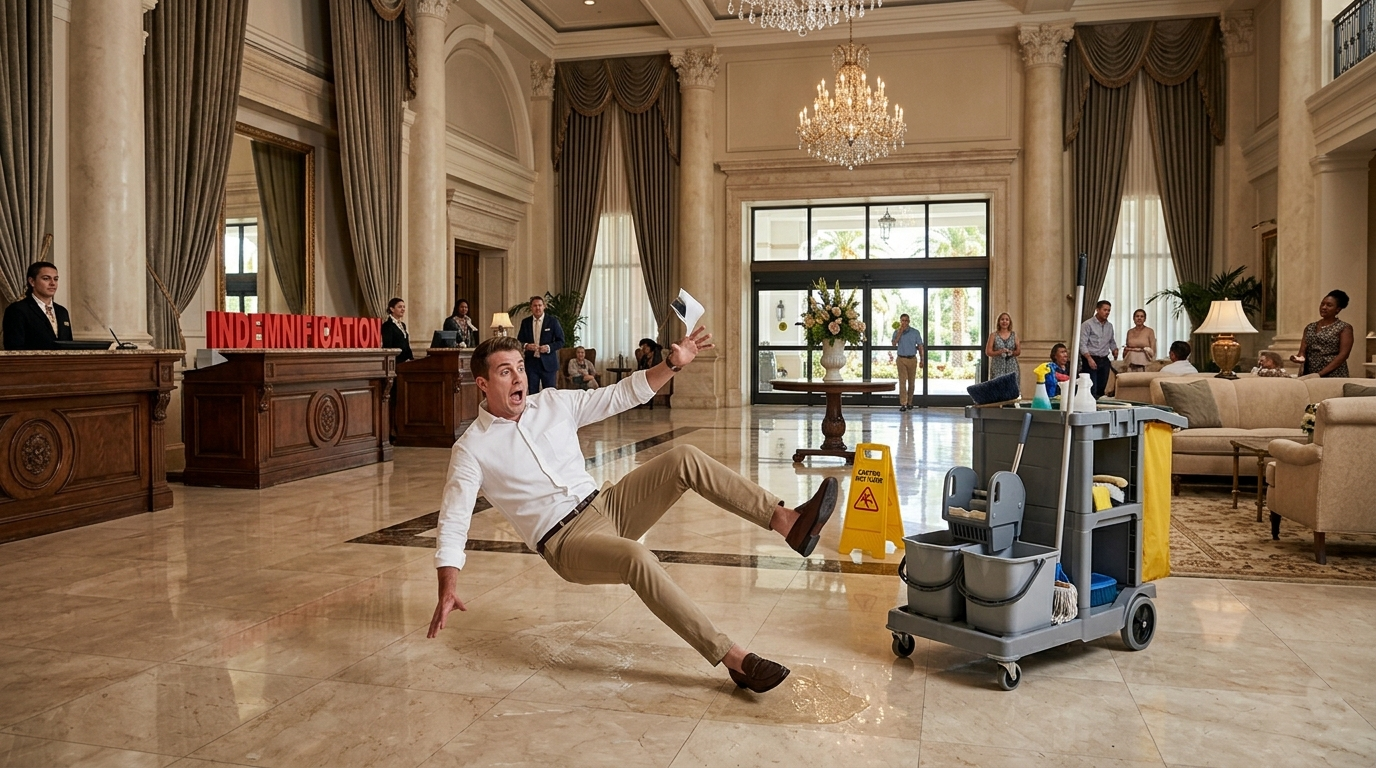
A nonprofit Board member almost paid $42,000, from her own savings, for a slip-and-fall incident in a hotel lobby. She had signed a hotel contract for the non-profit's fundraiser that she didn't read. Personally.
The paragraph responsible for her misfortune is called indemnification. It is buried on a back page of nearly every standard hotel contract, written in language designed to make your eyes glaze over. Most people skip it. Hotels are counting on that.
If your organization books large meetings, conferences, board retreats, galas, or customer events, the person signing the contract is almost certainly accepting a kind of professional liability for things they did not do, and have no control over. And they probably don't know it.
What is a hotel indemnification clause?
A hotel indemnification clause is a contractual promise from the event host (the "Client") to defend the hotel against lawsuits and pay the hotel's legal costs and damages. This frequently includes claims caused in part by the hotel itself.
A standard version reads something like this:
"Client agrees to indemnify, defend, and hold harmless Hotel from any and all claims arising out of or related to the Event."
Sounds like routine boilerplate. It is not. That single sentence can transfer the entire legal risk of your event, and a meaningful share of the legal risk inside the hotel itself, onto whoever signs.
Why this is an executive-oversight issue, not "just paperwork"
Three reasons indemnification belongs on the leadership desk:
• The exposure is unbounded. Unlike attrition or F&B minimums, indemnification has no dollar cap. A single serious-injury lawsuit can run into seven figures.
• The person on the hook is often among the most junior in the room. Volunteers, executive assistants, and first-time meeting planners are encouraged by their superiors, who don't want to deal with it, to sign these contracts every day. Their bosses don't realize the risk to their junior person's professional reputation should something go wrong at the event.
• Insurance does not always close the gap. Some general liability and event policies exclude "contractual liability assumed by the insured," meaning indemnification obligations that were voluntarily accepted in a hotel contract may not be covered. Read the declarations page of your organization's liability insurance before you assume that you are covered.
This is not a procurement issue. It is a fiduciary one.
Picture the scenario: a guest at your event has a few drinks at the hotel bar. They walk into the lobby, slip on a wet floor the hotel never marked as a danger, and break a wrist. They sue.
If you signed a contract with an indemnification clause, the hotel's insurance lawyers' first question is not "did we cause this?". It is "who is the Client?"
If your organization's name is on the contract and the signer is identified as an authorized representative, the Client is your organization, and the hotel pursues the organization's insurance. And the junior who signed the contract is blamed for the hassle, expense, and other repercussions of this lawsuit to your organization.
This is not theoretical. It is how the clause is structured, and it is how it gets enforced.

The Three Negotiation Asks that Take Five Minutes
Hotels send the worst version of the indemnification clause first. They expect pushback. The planners who push back almost always win.
Hand this list to whoever owns your hotel contract negotiation:
• Most importantly, limit indemnification to the contracting organization, not the individual signing. Add language stating the Client is "[Organization Name], a [legal entity type]" and that the signer acts solely in a representative capacity.
•Carve out the hotel's own gross negligence and willful misconduct. You should not indemnify the hotel for harm caused by the hotel. This is standard, defensible language any reasonable counterparty will accept.
• Make it mutual. The hotel indemnifies you for claims arising from its acts and omissions; you indemnify the hotel for claims arising from yours. Mutual indemnification is the market norm. There is no reason to accept a one-way clause.
Three lines. Five minutes to negotiate indemnification to be reasonable. Hotels don't walk away from a paying event because of this ask. They just hope you never read the contract in the first place.
Why hotels expect you to negotiate
The standard contract is the opening offer, not the final one. Hotel legal departments draft the worst-case version because most planners sign it. The few who push back, even mildly, almost always get the revisions they ask for.
The Strategic Takeaway
Indemnification is the highest-stakes paragraph in your hotel contract because the liability is uncapped. Attrition might cost you six figures in a worst case. A bad indemnification clause can cost an order of magnitude more, and can land hard on a balance sheet and on a professional reputation.
Treat hotel contract review as leadership control. Build a standard revision template. Require organizational naming on every signature line. Brief whoever signs on the three asks above.
The cost of doing this is fifteen minutes per contract, and the cost of not doing could be literally millions.
Frequently asked questions about hotel indemnification clauses
Q. What does "indemnify, defend, and hold harmless" mean in a hotel contract?
A. Together, these three words obligate the Client to pay the hotel's legal defense costs, accept liability for damages, and make the hotel financially whole for any covered claim, frequently even when the hotel partly caused the loss.
Q. What is a hold harmless clause in a hotel contract?
A. A hold harmless clause is the portion of the indemnification language that releases the hotel from liability and shifts the financial responsibility for losses onto the Client. It is the operational core of the indemnification clause.
Q. Can a hotel make me personally liable for an event?
A. Yes, if you sign the contract without your organization's full legal name attached and a clear "representative-capacity" statement, the contract can treat you as the Client, and the indemnification obligations attach to you personally. Always sign on behalf of a named legal entity.
Q. What is mutual indemnification?
A. Mutual indemnification is a clause where both parties agree to indemnify each other for harm caused by their own actions. It is the market standard and should replace the one-sided indemnification language hotels typically include in first drafts.
Q. What is gross negligence in a hotel contract?
A. Gross negligence is conduct that goes beyond ordinary carelessness. It's a serious lack of care that suggests reckless disregard for safety. Indemnification clauses should explicitly carve out the hotel's gross negligence and willful misconduct so the Client is not on the hook for the hotel's own egregious acts.
Q. Does my event insurance cover indemnification?
A. Not always. Many general liability and event policies exclude "contractual liability assumed by the insured," meaning indemnification obligations you voluntarily accepted in a hotel contract may not be covered. Review your policy's contractual liability language with your broker before signing.
Q. Who is the "Client" in a hotel contract?
A. The Client is the entity or person identified on the signature page as the contracting party. If only an individual name appears with no organization, the Client is that individual personally. Always ensure the organization's full legal name and the signer's representative capacity are clearly identified.
Q. Where is the indemnification clause located in a hotel contract?
A. Usually on one of the later pages, after the room block, food and beverage minimum, and cancellation terms. It is one of the most consequential paragraphs in the document and one of the most frequently skimmed.
If this was useful, please share it with the person who negotiates and/or signs your hotel contracts.
Faith Keiser is Founder of EventNation. For a free, privacy-safe contract scan that flags attrition risk and other high-dollar traps before you sign, EventNation offers a complimentary hotel contract review.
Ready to review your next hotel contract?
Get My Free Contract Review